
North Berkeley
Where Berkeley’s food culture was born and thrives.
The North Berkeley Neighborhood
North Berkeley occupies a compact stretch of Berkeley’s northern flatlands, bounded by Hearst Avenue to the south, Sacramento Street to the west, Rose Street to the north, and Euclid Avenue to the east — beyond which the terrain rises into the Berkeley Hills. Its residential streets were built out primarily between 1895 and 1923, when the Shattuck and Sacramento streetcar lines made this part of Berkeley accessible and the Brown Shingle movement was at its peak influence. The neighborhood’s architectural character reflects that layering directly: the blocks south of Cedar Street, which largely escaped the catastrophic 1923 fire, retain one of the highest concentrations of Maybeck-era homes in the city. North of Cedar, where the fire burned through, the rebuilt neighborhood shows the stucco Period Revival character — Spanish Colonial, Mediterranean, Tudor — that replaced the combustible wooden shingles after the disaster. You can read the fire line in the architecture simply by walking the blocks.
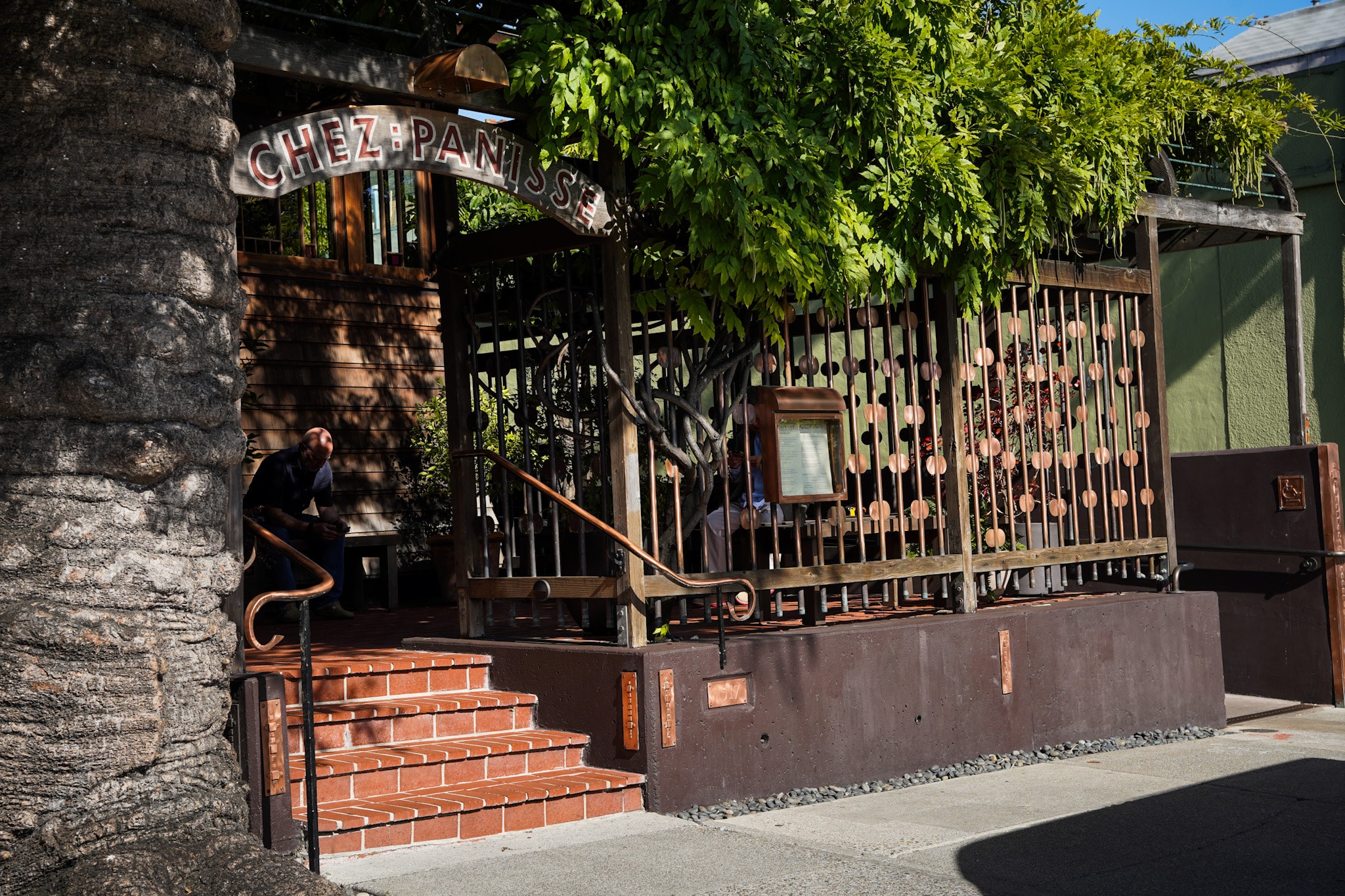
The food culture that made North Berkeley nationally known began not with a restaurant but with a coffee shop. On April 1, 1966, Alfred Peet opened the first Peet’s Coffee at the corner of Vine and Walnut Streets, introducing Americans to high-quality Arabica beans and dark-roast profiles that would become foundational to the specialty coffee industry. Three of his early disciples went on to found Starbucks in Seattle in 1971, making Peet’s the direct origin point of the American specialty coffee movement. Five years after Peet’s opened, Alice Waters opened Chez Panisse at 1517 Shattuck Avenue, and the California cuisine movement that followed transformed the North Shattuck corridor into one of the most influential dining districts in the country. The Cheeseboard Collective, founded in 1967 and converted to a worker cooperative in 1971, anchors the strip alongside Peet’s and Chez Panisse as an institution in its own right. This stretch of North Shattuck between Vine and Rose acquired the informal name Gourmet Ghetto in the 1970s — a term coined in a comedy sketch by a Cheeseboard employee that captured the neighborhood’s self-aware embrace of its food identity. In 2019, the North Shattuck Association retired the name in favor of the district’s older designation, North Shattuck, though the corridor’s reputation has never required a label to sustain it.
What draws buyers to North Berkeley is not any single feature but the way the neighborhood holds everything together without appearing to try. Within a few blocks of most addresses you will find restaurants, cafes, groceries, schools, parks, and direct access to BART. The North Shattuck corridor brings genuine commercial energy — the kind that makes daily life easy and unhurried. Yet step a block or two onto the residential streets and that activity recedes almost entirely. The blocks feel quiet, canopied, and distinctly removed from the bustle. That combination, rare in any city and rarer still at this price point, is what most buyers mean when they describe North Berkeley as a place that simply feels right.
Megan’s take
“The blocks between Cedar and Rose — the heart of the north Shattuck corridor — are among the most consistently competitive in all of Berkeley. Buyers are often surprised by how quickly homes sell here, and by how rarely sellers need to negotiate. It’s a neighborhood that offers community and convenience. When a home comes up on Josephine or Eunice close to Live Oak Park, I tell buyers to be ready to write an offer before the weekend is over.”
What is daily life like in North Berkeley
Daily life in North Berkeley tends to organize itself around a handful of anchors that residents return to so reliably they stop thinking of them as destinations. A morning often starts at Peet’s Coffee on Vine and Walnut — the original location, which still draws a line out the door on weekend mornings. From there the day branches: drop a package at You Send It on Shattuck, pick up pet food at the Holistic Hound, stop into Andronico’s or the nearby Safeway for groceries, or make the short trip to Monterey Market in Northbrae for produce that draws buyers from across the East Bay.
The North Shattuck corridor rewards unhurried attention. Saul’s Restaurant and Delicatessen has been serving Jewish deli classics on Shattuck since 1986 — the kind of place that feels essential rather than nostalgic. Kamado offers some of the best sushi in Berkeley at the northern end of the strip. Cupcakin’ Bake Shop handles the sweeter errands. For fitness, Benchmark Climbing on San Pablo draws a loyal neighborhood following. On Thursday mornings, the Farmers Market sets up along Shattuck between Vine and Rose — the one that functions most naturally as a neighborhood gathering, where North Berkeley runs into itself mid-week. The larger Saturday Farmers Market is held downtown on Center Street between Milvia and Martin Luther King Jr. Way.
The cultural life of the neighborhood is anchored by the Hillside Club on Cedar Street, founded in 1898 and Berkeley’s oldest civic organization. Its landmark brown-shingle clubhouse — rebuilt by John White after the 1923 fire destroyed the original Bernard Maybeck-designed structure — hosts concerts, lectures, chamber opera, and community events throughout the year. Live Oak Park serves a parallel function outdoors: its ten acres of lawns, recreation center, tennis courts, and mature oak canopy make it one of the finer flatlands parks in the city, and the festivals and community events it hosts throughout the year give the surrounding residential streets a social life that most urban neighborhoods can’t match.
At the neighborhood’s eastern edge, Rose Walk — the Maybeck-designed pedestrian promenade linking Euclid Avenue to Rose Street, designated a Berkeley Landmark — threads through a concentration of Arts and Crafts homes that represents some of the finest residential architecture in the city. The Julia Morgan house at 1400 Le Roy Avenue, at the head of Rose Walk, is among the most celebrated addresses in North Berkeley. A short distance uphill, the Rose Garden on Euclid Avenue offers one of the more beautiful public spaces in the East Bay — a WPA-era terraced amphitheater of more than 250 rose varieties facing west toward the Bay, at peak bloom in mid-May. An underground tunnel beneath Euclid Avenue connects the Rose Garden directly to Codornices Park, which extends the green corridor with softball fields, picnic meadows, hiking trails through oaks and redwoods, and the famously long concrete slide that has been a rite of passage for Berkeley children for generations.
What makes all of this work is the way the neighborhood holds the commercial and the residential at a comfortable distance from each other. The shops and restaurants along North Shattuck are genuinely convenient to most addresses, but step onto the side streets and the activity recedes almost entirely. The blocks feel quiet, leafy, and distinctly removed from the bustle — which is exactly what most buyers mean when they say they want a neighborhood rather than just a location.
What schools serve North Berkeley
Most of North Berkeley falls within the attendance boundary for Thousand Oaks Elementary School, one of Berkeley Unified’s most consistently well-regarded elementary schools and a significant driver of buyer demand in the neighborhood. Middle school students typically attend King Middle School, and all BUSD students attend Berkeley High School for grades 9 through 12.
School boundaries in Berkeley Unified are address-specific and subject to periodic revision. Before making any decisions based on school access, I always recommend verifying the current boundary map directly with BUSD. I am glad to help with that for any specific address you are considering.
Parks and outdoor life in North Berkeley
Live Oak Park, on Shattuck Avenue near the North Shattuck corridor, anchors the neighborhood’s outdoor life with ten acres of lawns, a recreation center, tennis courts, a large playground, and a community garden that has been in continuous operation since the 1970s. The park hosts farmers market overflow, seasonal festivals, and the kind of informal daily activity — dog walkers, parents with strollers, neighbors on benches — that makes a park feel genuinely lived-in rather than merely maintained.

At the neighborhood’s eastern boundary, Codornices Park at 1201 Euclid Avenue offers a wilder counterpart: a creek-fed canyon park with softball and baseball fields, basketball courts, picnic areas, hiking trails through oaks and redwoods, and the famously long concrete slide — one of the longest in the region — that draws families from across Berkeley. An ADA-accessible tunnel beneath Euclid Avenue connects Codornices directly to the Berkeley Municipal Rose Garden, the WPA-era terraced amphitheater of more than 250 rose varieties with Bay views and peak bloom in mid-May. The Rose Garden serves the whole city as a backdrop for graduations, engagement photos, and weekend gatherings, but its proximity to North Berkeley makes it effectively a neighborhood amenity for residents of the surrounding blocks.
Getting around from North Berkeley
The North Berkeley BART station at Sacramento Street and Delaware Avenue is the neighborhood’s primary transit link, offering direct service to San Francisco, Oakland, and the broader BART network. From Josephine Street and the Vine Street corridor — among the neighborhood’s most sought-after residential blocks — the station is roughly a ten-minute walk. Josephine Street in particular stands out as one of the best-positioned addresses in North Berkeley for buyers who prioritize both neighborhood quality and transit convenience. AC Transit’s 18 line runs along Telegraph Avenue and connects to Downtown Berkeley and the UC campus; the 72 line along San Pablo Avenue serves West Berkeley and the waterfront. Most North Berkeley streets are flat and well-suited to cycling, with good connectivity to Berkeley’s bike boulevard network.
For drivers, Highway 24 is accessible via Tunnel Road, providing access to Contra Costa County and the 680 corridor. Interstate 80 is reachable via University Avenue or Ashby Avenue. Downtown San Francisco is typically 30 to 35 minutes by BART.
North Berkeley neighborhood map

Thinking about North Berkeley?
I’ve represented buyers and sellers throughout this neighborhood for years. If you’d like a candid conversation about what’s available and what to expect, I’m always glad to talk.
Frequently asked questions about North Berkeley
North Berkeley Resources
Links open in a new window. If you find a broken link, let me know.