The first months of 2026 have brought a lot of noise at the national level, between a weakening jobs picture, stubborn inflation, and a geopolitical shock that has upended rate expectations for the rest of the year. Locally, the story in Berkeley is different: tight inventory, fast sales, and buyers competing hard for well-prepared homes. In this update I will walk through the economic backdrop, where mortgage rates stand today, what the national and California numbers show, and what I am actually seeing on the ground here in Berkeley heading into spring.
The Economic Backdrop
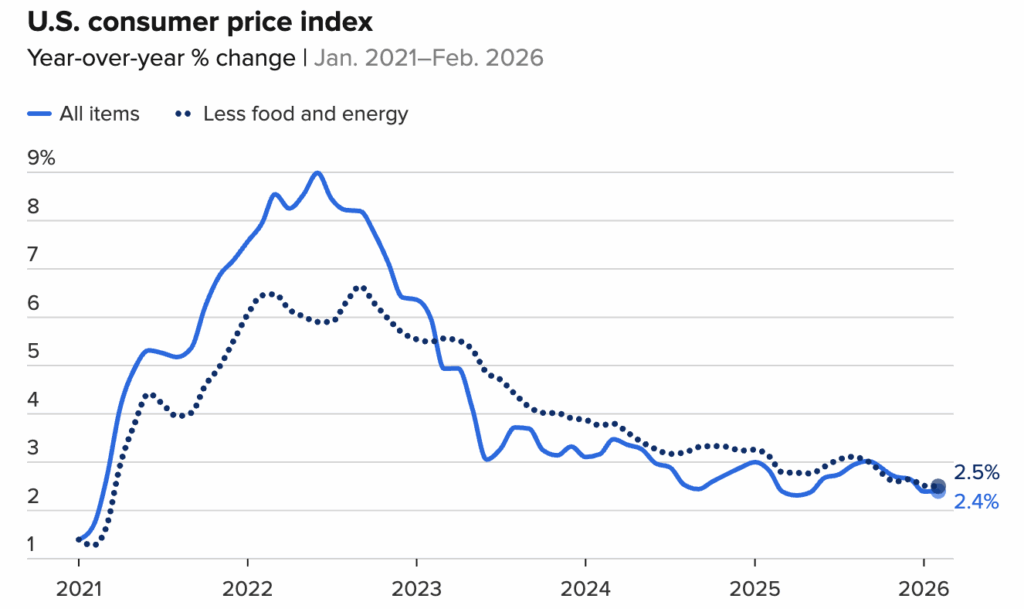
The February Consumer Price Index report from the Bureau of Labor Statistics showed headline inflation running at 2.4 percent year-over-year, with prices rising 0.3 percent on a seasonally adjusted basis for the month. Shelter was the largest contributor to the monthly increase, up 0.2 percent, while food rose 0.4 percent and energy climbed 0.6 percent. Core inflation, which strips out food and energy, remains stubborn, driven primarily by services, and the Fed is not yet close to declaring victory.
The jobs picture added another complication in early March: the February Employment Situation report showed total nonfarm payrolls declining by 92,000, the first outright monthly drop in several years, with the unemployment rate holding at 4.4 percent.
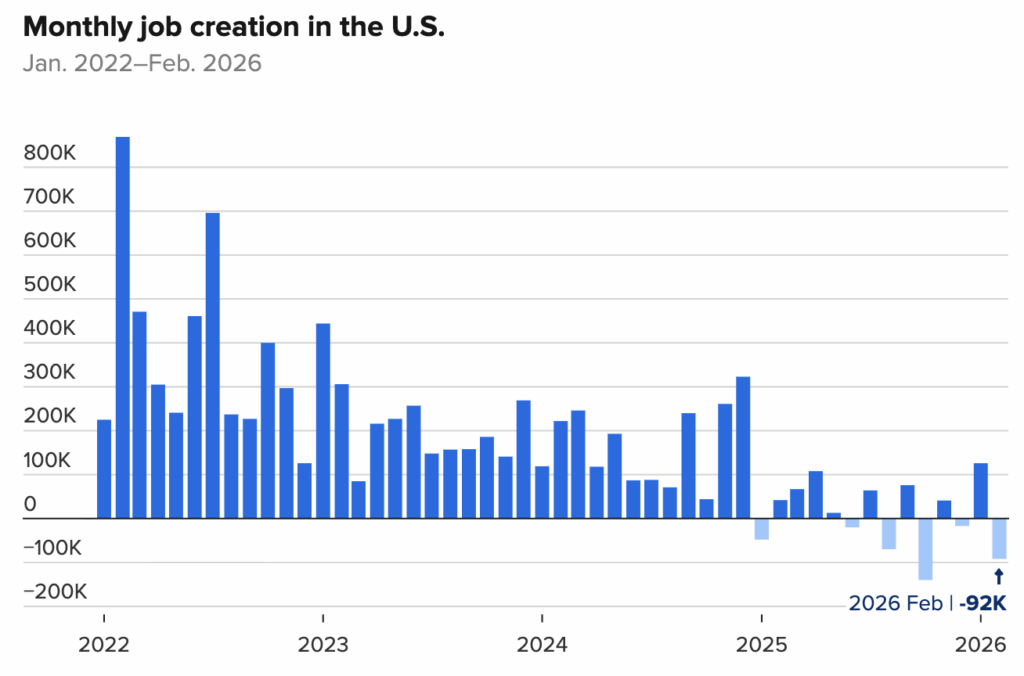
That combination, sticky inflation alongside a softening labor market, is a genuinely difficult policy environment, and it is shaping everything that follows on rates.
The Fed
The Federal Reserve held its benchmark federal funds rate at a range of 3.5 to 3.75 percent at the March 18 FOMC meeting, marking the second consecutive pause following three quarter-point cuts in the final months of 2025. In its statement, the committee said that uncertainty about the economic outlook “remains elevated” and explicitly flagged that “the implications of developments in the Middle East for the U.S. economy are uncertain.” The Summary of Economic Projections released alongside the decision raised the Fed’s year-end inflation forecast to 2.7 percent, up from 2.4 percent in December, reflecting the energy price shock from the Iran war.
There remains a median projection of one quarter-point cut in 2026, but the committee is deeply divided: seven of the nineteen participants penciled in no cuts at all this year, while only five projected more than one. At his press conference, Chair Powell acknowledged the Fed is not making as much progress on inflation as it had hoped and said the bar for cutting rates “is a little bit higher” given current conditions. His term as chair ends in May, though he indicated he intends to remain on the Board of Governors until an ongoing DOJ investigation is fully resolved.
Mortgage Rates
For mortgage rates, the picture has shifted somewhat since the Iran war began pushing oil prices higher in late February, but the year-over-year improvement for buyers remains meaningful. The Freddie Mac Primary Mortgage Market Survey for the week of March 12 showed the 30-year fixed rate at 6.11 percent, up from a recent low of 5.98 percent in late February but still more than half a percentage point below the 6.65 percent recorded a year ago. The 15-year fixed came in at 5.50 percent, down from 5.80 percent this time last year.
To put that year-over-year difference in concrete terms: on a $1.4 million Berkeley home purchase with 20 percent down, a $1.12 million loan at today’s rate carries a principal and interest payment of roughly $6,790 per month. At last March’s rate, that same loan cost about $7,200 per month, a difference of more than $400 every month. Given the Fed’s cautious tone, rates are unlikely to move sharply in either direction in the near term. The next meaningful catalyst will be how energy prices evolve and whether the April inflation data shows the Iran war’s impact beginning to flow through to core readings.

National and California Housing
The NAR Existing-Home Sales report for February, released March 10, showed a modest rebound: existing home sales rose 1.7 percent to a seasonally adjusted annual rate of 4.09 million, recovering some of January’s sharp pullback. The national median price edged up 0.3 percent year-over-year to $398,000, the 32nd consecutive month of annual price gains. Inventory rose to 3.8 months of supply, and homes sat on the market a median of 47 days. NAR Chief Economist Lawrence Yun noted that affordability has improved for eight straight months, with wages now growing faster than home prices, but called the overall level of transaction activity a long way from pre-pandemic norms. He is right: the market is functioning, but it is not yet healthy by historical standards.
The most recent statewide data from the California Association of Realtors covers January 2026, showing closed sales of 256,550 on a seasonally adjusted annualized rate, a 10.8 percent drop from December and 1.3 percent below January 2025. The statewide median price fell to $823,180, a 23-month low. The San Francisco Bay Area was one of only two regions to show a year-over-year price gain, though a marginal one, up just 0.2 percent. C.A.R.’s full-year forecast still calls for 274,400 sales statewide and a record $905,000 median by year’s end, but the year will need a strong spring to close the gap. As always, statewide California figures are a distorted lens for what is happening in the inner East Bay. The mix of markets, geographies, and price points across a state this large means the headline rarely tells you much about Berkeley.
Berkeley: A Different Market
January’s local data diverged sharply from both the state and national picture. According to Redfin MLS data for Berkeley, the median sale price in January was $1.3 million, up 8.3 percent year-over-year. Homes sold in a median of 18 days, less than half the 32 days recorded a year ago. Twenty-three homes closed in January, up from 21 the prior January, with buyers submitting an average of seven offers per listing. In a month when California’s statewide market slumped to a near two-year low, Berkeley moved faster and at higher prices than it did at the same point in 2025.
What I am seeing week to week is consistent with those numbers. Well-prepared listings in Elmwood, Thousand Oaks, and North Berkeley are attracting multiple competitive offers and closing above list price. The neighborhoods that are drawing the most activity tend to share a few characteristics: strong school proximity, walkability, and homes that have been properly prepared and deferred maintenance addressed before hitting the market. Listings that come out without inspection packages or with obvious work still on the table are sitting longer and negotiating harder. BESO compliance is still coming up in buyer conversations more frequently, and sellers who have addressed it ahead of listing are finding it easier to sell quickly. The $1.1 to $1.6 million range remains the most competitive corridor. At the upper end, above $2 million, we are seeing more selective buyers taking their time, but qualified offers are still materializing for the right property.
Guidance for Buyers and Sellers
For buyers entering the spring market, the relevant question is not whether rates will eventually come down further, but whether a rate near 6.1 percent is workable for your situation today. If you are qualified and have been waiting, the combination of rates meaningfully below last year’s levels and inventory that is still historically tight suggests that sitting out another season carries real opportunity cost. I recommend starting with the Buyer Net Sheet Calculator and Mortgage Calculator on my website to get a clear picture of your all-in monthly payment and closing costs before you are in a multiple-offer situation. Speed and preparation are still decisive advantages in Berkeley.
For sellers, the spring window is open and conditions are favorable for well-positioned properties. Homes that come to market with complete disclosures, competitive pricing, and a clean presentation are moving quickly and closing well above list. Pricing requires precision: Berkeley buyers are sophisticated and paying close attention to data. Use my Seller Net Sheet Calculator to model your expected proceeds, and if you have been weighing a sale against other options, the Opportunity Cost Calculator can help quantify what staying or waiting actually costs you over time. If BESO compliance is unresolved on your property, the BESO Compliance Guide is a useful first reference before we talk through a pre-listing plan together.
Looking Ahead
The next month brings several data releases that will shape the mortgage rate environment. The March Employment Situation report is due April 3, and after February’s surprising payroll decline, that number will be closely watched for signs of whether labor market weakness is deepening or stabilizing. The March Consumer Price Index follows on April 10, and its read on energy prices in the aftermath of the Iran war will be particularly important for the inflation narrative. The next FOMC meeting is scheduled for April 28 to 29, where the committee will have the benefit of another full data cycle to assess whether conditions have shifted enough to justify movement on rates.
If you would like to talk through any of this in the context of your specific situation, I am always glad to connect. Reach me directly at megan@meganmicco.com, by phone at (510) 708-9952, or through the contact page on my website. Whether you are thinking about buying, selling, or simply trying to understand what the market means for your home’s value, I am happy to take the conversation from data to decision.