
Big news for anyone buying or selling a home in Berkeley. Starting January 1, 2026, the Building Emissions Saving Ordinance (BESO) is getting a major upgrade with new resilience requirements that go beyond the current assessment-only process. As someone who’s been helping clients navigate Berkeley’s real estate market for years, I want to break down exactly what these changes mean for you with this 2026 BESO Requirements Guide.
Understanding Berkeley’s Climate Goals
Before we dive into the specifics, let’s talk about why this matters. Berkeley has set ambitious climate action goals, and residential buildings are a huge piece of the puzzle. Single-family homes and 2-4 unit properties generate 34% of the city’s building-based greenhouse gas emissions. That’s significant! The new BESO requirements are designed to systematically upgrade our housing stock to be more resilient, energy-efficient, and prepared for our electric future.
For Sellers: What You Need to Know
The Assessment Is Now Mandatory
Here’s the biggest change: you can no longer defer the Home Energy assessment to the buyer. Before you list your property, you must hire a qualified assessor to complete the evaluation. An assessment will cost between $300 – $500 depending on the size of your home. Think of it as similar to getting a pre-listing inspection—it’s now a required step in preparing your home for sale.
The assessor will then send you a Home Energy Report (HER) which includes a Home Energy Score (HES) on a scale of 1-10. The higher the rating, the more efficient your home is. The report will also make recommendations on savings measures you can implement to improve the efficiency of your home.
Also, there’s no assessment filing fee for single-family homes and duplexes anymore. However, if you skip this step, there’s a $500 non-compliance fee, so it’s definitely worth getting it done upfront.
Including the HES on Your MLS Listing
Once you have your Home Energy Score, your agent will need to manually add it to the property notes section of your MLS listing. This gives potential buyers transparent information about your home’s current energy performance and upgrade opportunities. In my experience, buyers increasingly value this information—it shows them the home’s energy efficiency and helps them plan for future improvements.
Your Compliance Options
You have two main paths to compliance, and which one you choose depends on your timeline and circumstances:
Option 1: Complete Upgrades Before Sale
This is the cleanest path. You complete the necessary resilience upgrades to achieve 6 credits and obtain a BESO Certificate of Compliance (costing $150) before the close of escrow. This makes the transaction seamless for your buyer and can be a strong selling point.
Here’s what counts toward your 6 credits:
- Recent upgrades matter! Any permitted upgrades you’ve completed in the past 5 years can count toward your credits. Installed solar panels and a battery system three years ago? That’s 6 credits right there—you’re done!
- High performers get credit: If your home scores 9 or 10 on the Home Energy Score, you automatically receive 2 credits. That means you only need 4 more credits to reach compliance.
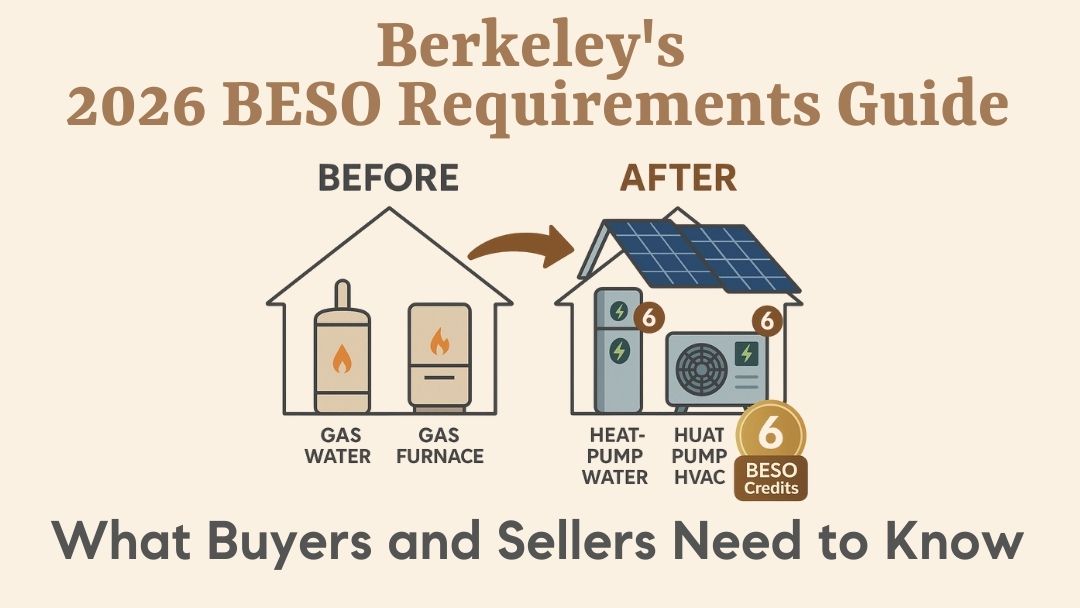
- Major upgrades are worth it: Installing a heat pump water heater or heat pump HVAC system each earn you the full 6 credits needed.
Option 2: Defer to the Buyer
If completing upgrades before sale doesn’t work for your situation, you can defer the upgrade responsibility to the buyer. However, you’ll need to contribute $2,500 toward a $5,000 Resilience Upgrade Deposit held in escrow. The buyer contributes the other $2,500, but the full $5,000 deposit is refundable to them once they complete the required upgrades within two years of purchase. This effectively means you are offering the buyer a $2,500 credit.
Important Exemptions to Know About
Your home might already be compliant! Here are the key exemptions:
- Heat Pump Exemption: If your home already has a heat pump for either water heating OR space heating (HVAC), you’re fully compliant. No additional upgrades needed!
- All-Electric Homes: If your home is all-electric with a capped gas line documented by permits, you’re exempt from the upgrade requirements.
- Property Type: ADUs and condos are currently exempt from these requirements.
For Buyers: Planning for Your Purchase
Understanding the Home Energy Score
When you’re looking at listings, you’ll now see the Home Energy Score in the property notes. This score (ranging from 1-10) gives you valuable insight into the home’s current energy performance. More importantly, the HES report shows you exactly what upgrade opportunities exist.
As a buyer, I encourage you to view this information as a roadmap rather than a deterrent. These upgrades often come with significant rebates and incentives, and they’ll make your home more comfortable while lowering your energy bills.
When Upgrades Haven’t Been Completed
If the seller defers the upgrades to you, here’s what to expect:
Your Timeline and Responsibilities:
- You’ll have two years after closing to complete the required 6 credits of upgrades
- A no-cost one-year extension is available if needed
- You’ll contribute $2,500 to the deposit (the seller contributes the other $2,500)
- The entire $5,000 deposit is fully refundable once you complete and verify your upgrades. Just complete the BESO Refund Claim Form.
Strategic Planning: During negotiations, you can request that the seller pay more (or all) of the deposit, or vice versa. This is part of your negotiation strategy, just like any other aspect of the purchase. I’ve found that sellers motivated to close quickly may be willing to contribute more toward this deposit.
Making Upgrades Work for You: The beauty of the flexible resilience standard is that you can prioritize upgrades that make the most sense for your home and budget. A single heat pump water heater gets you all 6 credits needed. Alternatively, you might combine solar panels (3 credits), a battery system (3 credits), and boom—you’re compliant and you’ve dramatically increased your home’s resilience and value.
Available Support and Resources
This is where it gets exciting. There are substantial rebates and incentives available for these upgrades through programs like:
- Tech Clean California
- State and federal tax credits (many expire at the end of 2025)
- Utility company rebates
- BayREN financing options
I always point my buyers to The Switch is On, which has a comprehensive database of contractors and current incentive programs. Many of my clients have been pleasantly surprised by how much financial support is available.
I also have a list of home electrification resources that you may find helpful.
First-Time Homebuyer Exemption
If you’re a first-time homebuyer enrolled in an income-qualified program like CalPLUS, MyHome Assistance Program, or CalPLUS Access Program, you may qualify for an exemption from BESO requirements. You must apply for this exemption before closing. Just reach out to the city of Berkeley BESO program at BESO@BerkeleyCA.gov.
Why This Actually Makes Sense
I know regulations can feel overwhelming, but here’s my honest take after years in Berkeley real estate: these upgrades are investments that pay off. Heat pump systems are more efficient, all-electric homes are safer and healthier (no combustion gases), and with the Bay Area Air District’s Zero-NOx Appliance Rule coming (banning new gas water heaters starting in 2027 and gas furnaces in 2029), you’re future-proofing your home.
Plus, Berkeley’s ambitious climate goals mean we’re all in this together. Every home that gets upgraded brings us closer to our community’s vision for a sustainable, resilient future.
Getting Started
Whether you’re buying or selling, the key is to plan ahead. For sellers, schedule that Home Energy assessment early—don’t wait until you’re ready to list. For buyers, factor these requirements into your home search and budget planning from the start. I also encourage you to use my BESO Compliance Calculator to better understand the best path to compliance.
As always, I’m here to help you navigate these changes and make the best decision for your situation. Berkeley’s housing market is evolving, and understanding these requirements will help you make informed, confident real estate decisions.
Have questions about how BESO applies to your specific situation? Let’s talk!